







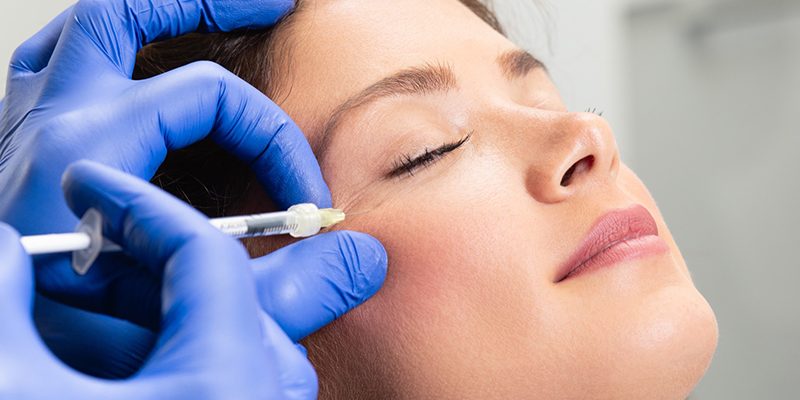
Botox is basically a toxin derived from bacteria. It paralyzes the muscles where it is applied. For cosmetic purposes, it is used to remove wrinkles on the skin, which have developed over time, and to reposition certain muscle groups (such as the ones raising the eyebrows). This provides a rested facial expression that makes people look younger.
How is it applied?
In the procedure that takes 5-10 minutes on average, it is applied to certain muscles with very fine needles to rejuvenate the face. It causes no pain. Sometimes, analgesic creams can still be applied before the application.
No swelling or bruising develops after the application. The person can return to work the same day. Its effect begins to be observed within 4 to 7 days.
The patient is examined again on the tenth day and depending on the result, it can be reapplied to certain places if necessary. Its effect lasts 4-6 monhs on average. It can be repeating every 4-6 months, and there is no harm in continuing like this.
Who Can Have the Procedure?
Anyone other than those who are allergic to botox women in pregnancy or lactation period, and those with certain muscular diseases can have Botox injection, which is a safe procedure in competent hands.
What are Its Application Areas on the Face?
Horizontal lines on the forehead, deep and vertical lines between the two eyebrows (frown lines) and crow’s feet at the corners of the eyes are the most common application areas.
Botox can also be safely applied to upper lip lines, vertical lines on the chin, lines caused by laughing at the side of the nasal ridge and vertical bands on the front side of the neck, depending on the condition and demand of the person.
In recent years, it has also been commonly applied to the cheek muscles, with intent to reduce the prominence caused by clenching of the teeth.
Is There Any Possibility of Undesirable Consequences?
Since Botox temporarily paralyzes the muscles, it can sometimes cause paralysis in unwanted muscles. For example; single raised eyebrow, drooping eyelids, slightly asymmetrical face…
However, these are situations that can be quickly resolved with touch-ups after the patient is re-examined on the 7th-10th day. Moreover, the incidence rate of such conditions is close to zero when the procedure is performed by experienced hands.